
 01
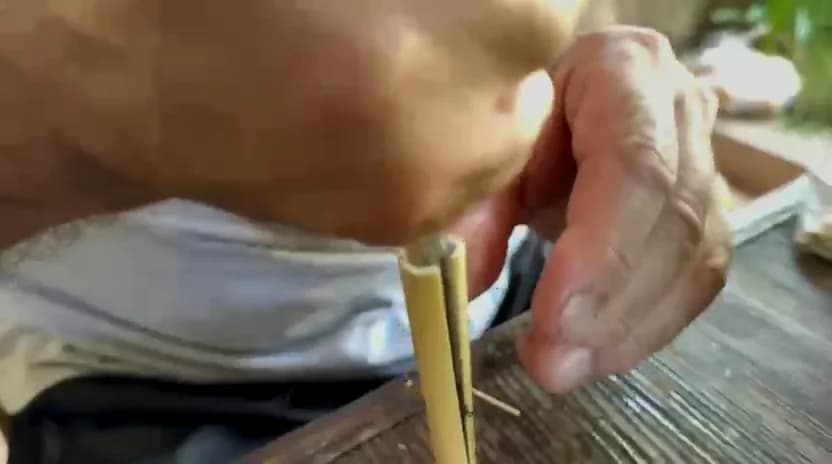
01Tube cane splitting
Splitting the tube cane
The tube is divided into workable slips while respecting the direction of the fibres.
A measured process beyond mass production
The workshop puts consistency before speed. Natural material is assessed by sight and touch, while final adjustments respond to the resistance and use described in the order note.
The real workshop process
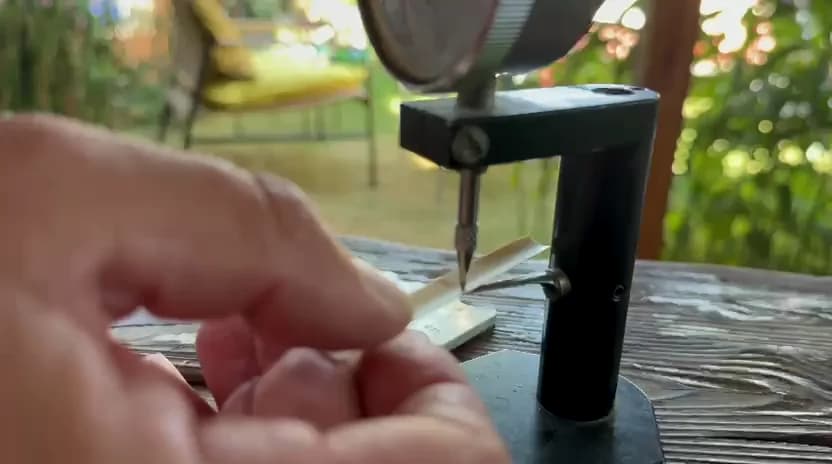
Every frame was recorded during real work in the HAKAN REEDS workshop. Fibre integrity, hardness and thickness are checked step by step, with gouger settings refined from the readings.
01 — 09
Scroll to explore the stages
01Tube cane splitting
The tube is divided into workable slips while respecting the direction of the fibres.
 02
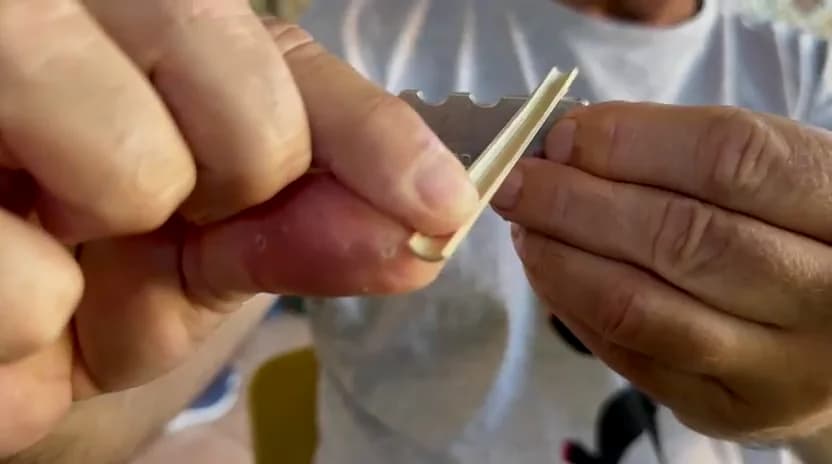
02Split-cane preparation
Coarse fibres and uneven edges left by splitting are carefully cleaned with a blade before measurement.
 03
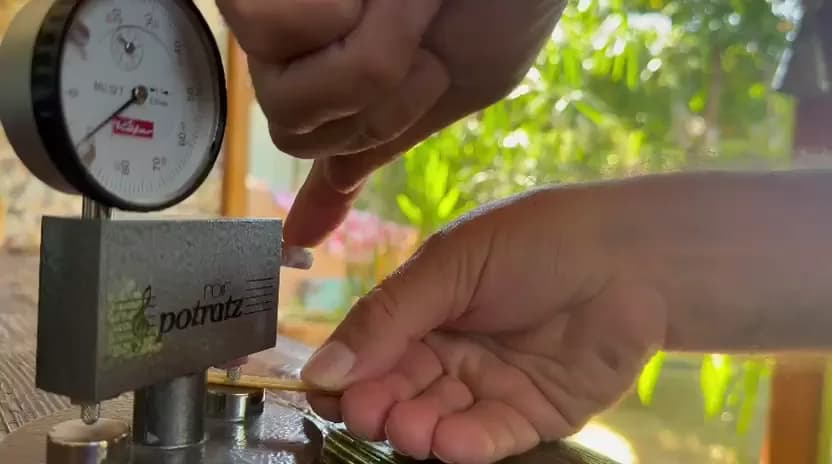
03Hardness test
Resistance is read at multiple points with a calibrated analogue hardness tester before the slip is processed further.
 04
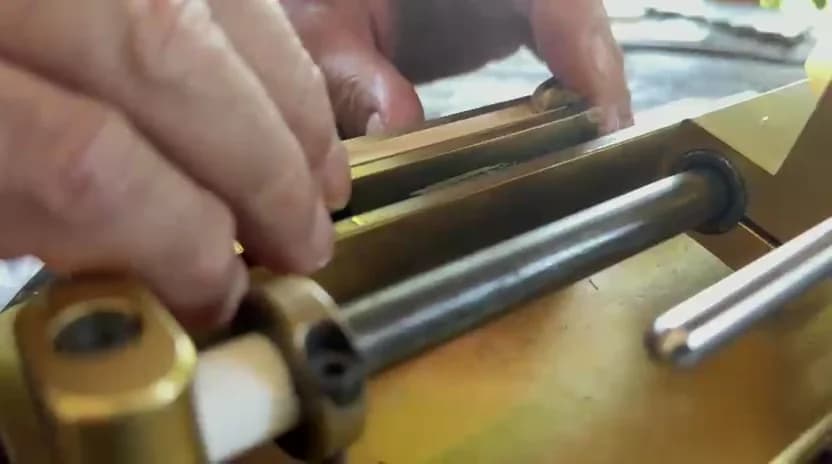
04Gouger setup
The cane is seated in the gouger with its inner surface correctly supported.
05Thickness gauging
The remaining material is read across the centre and sides with a dial gauge.
 06
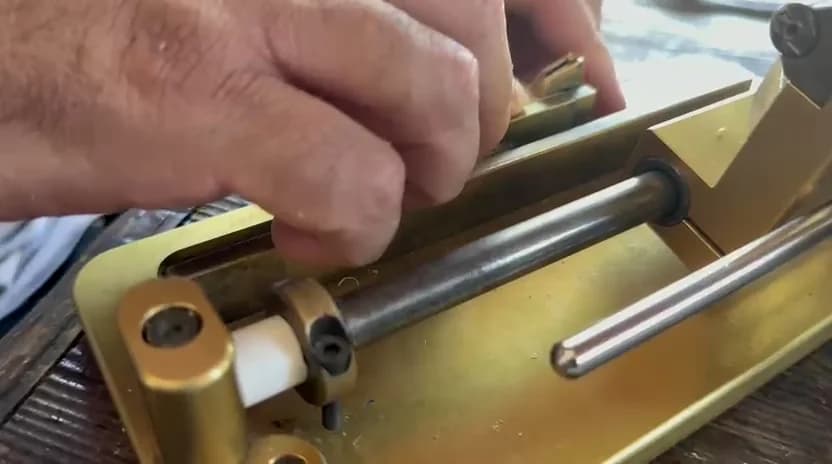
06Cane alignment
The slip is centred and secured to produce a balanced, symmetrical gouged profile.
 07
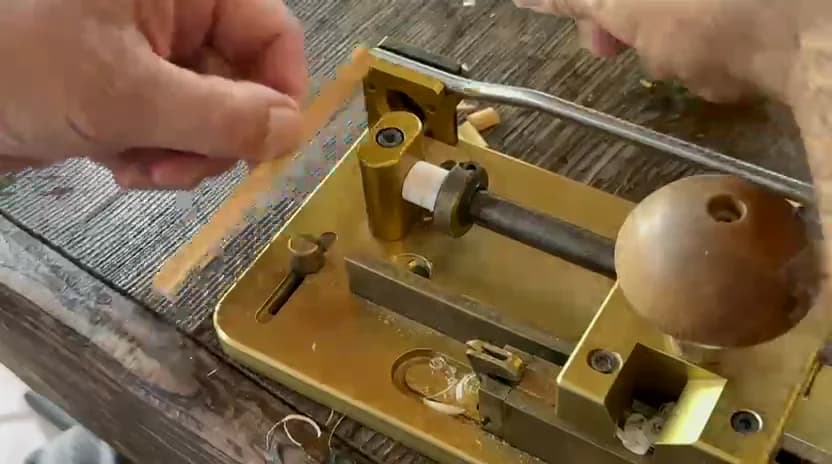
07Profile inspection
Curve, surface integrity and remaining shavings are checked again after gouging.
 08
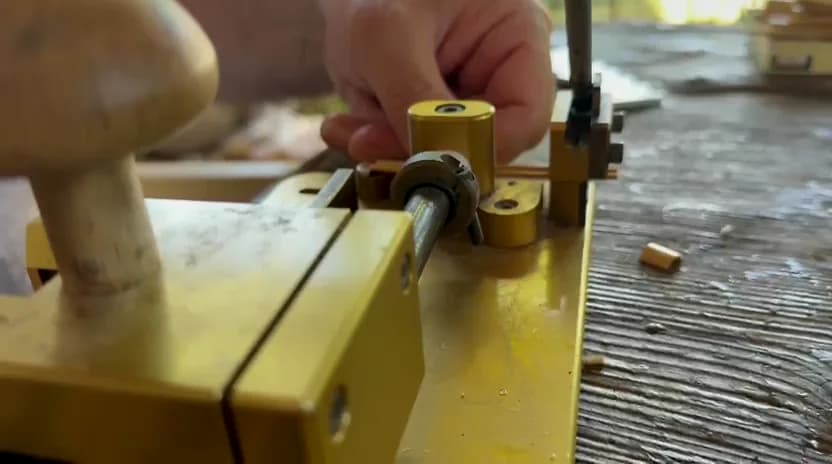
08Cane fixation
After measurement, both ends are secured again so the cane cannot shift during the final controlled pass.
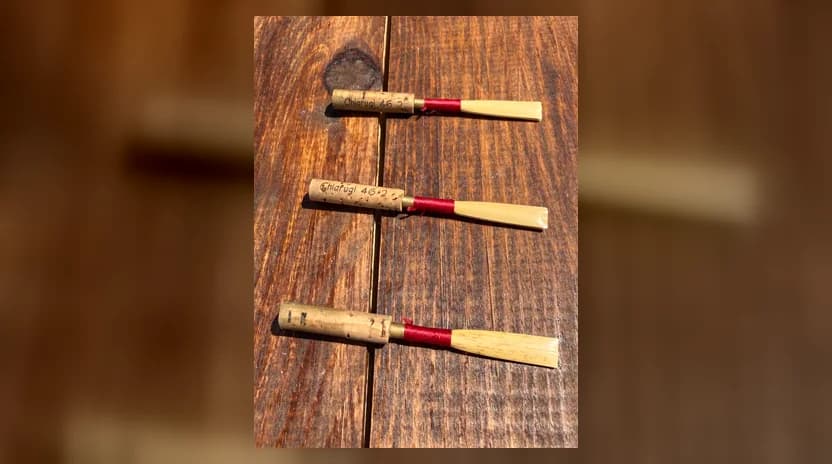 09
09Finished oboe reed
After shaping, folding, tying and scraping, every reed receives a final inspection.
01
Cane is separated by diameter, fibre direction, surface integrity and suitability for working. Suitable pieces move forward; unsuitable pieces are set aside.
02
A balanced profile is more than one thickness figure. Spine, heart, rails and tip are considered together, listening for how each small intervention changes the whole response.
03
Requests are not treated as identical products pulled from a shelf. Estimated preparation is 2–3 weeks; current workload and delivery details are shared when the request is confirmed.